If LinkedIn is saturated or expensive, the right move is not to swap it for one replacement. The better play is to match the channel to the evidence you need, then layer in outreach controls. For software roles, that often means GitHub. For data roles, Kaggle. For design, Behance. For startup-intent candidates, Wellfound. For local relationships, Meetup. For active applicants and volume, job boards. And when a lean team needs cross-channel discovery plus ranking and deduplication, a sourcing platform can do the heavy lifting.
That is the core answer behind effective LinkedIn sourcing alternatives. The channel matters, but so does signal quality, freshness, and whether you have a lawful path to contact the person. A strong public profile can still be stale, while a fresh application can still be weak evidence. So treat candidate sourcing as a decision about evidence, not just a search task.
The simplest way to choose a sourcing channel
Start with the proof your role actually needs. If the job is code-heavy, look for repositories and recent commits. If it is design-heavy, look for case studies and process. If it is a startup role, look for startup intent. If it is high-volume, look for active applicants. That is the most practical way to think about talent pools.
Here is the rule CVViZ uses: one channel is rarely enough. A better operating model combines one high-signal specialist pool, one active-applicant channel, and one searchable internal database. That gives you breadth without losing control.
| Hiring need | Best first channel | Why it fits | Main weakness | Outreach posture |
|---|---|---|---|---|
| Software engineer, open-source, developer tools | GitHub | Code, contribution history, issues, and project context show work | Public activity may be stale | Reference a specific project, not a bulk list |
| Data scientist, ML engineer, analyst | Kaggle | Notebooks, datasets, models, and reproducible work show practical signal | Rankings are not complete proof of job fit | Use value-driven, consented contact |
| Product, brand, UX/UI, motion | Behance | Portfolio work is visible and easy to review | Portfolio quality does not prove availability | Start with a project-specific brief |
| Startup operator or founder-minded generalist | Wellfound | Startup-intent candidates are already in a startup context | Strong startup skew | Use native sourcing controls |
| Local or community-led hiring | Meetup | Geography and group participation can surface local talent | It is relationship-led, not a resume database | Build presence first |
| Active applicants or volume roles | Job boards | Predictable inbound flow and measurable posting performance | High volume can lower signal-to-noise | Screen consistently |
| Lean TA team needing multiple channels | Sourcing platform | Cross-channel discovery, ranking, deduplication, workflow control | Paid tools vary widely | Use suppression and human review |
How signal quality changes the shortlist
Candidate sourcing signal quality is how directly a profile supports a job-related inference. In plain English, it tells you whether the evidence is real or just decorated. A GitHub repository with recent commits, ownership, tests, and documentation tells you much more than a keyword-rich profile. Likewise, a Kaggle notebook with a reproducible method is stronger than a leaderboard badge alone.
This matters because LinkedIn sourcing alternatives do not all signal the same thing. Some pools show craft. Some show intent. Some show activity. Others show only volume. So the job of candidate sourcing is to ask, “What do I still need to validate next?”
A few practical examples help:
- GitHub can show applied software work, but public work is not the same as production experience.
- Kaggle can show modeling skill, but competition performance does not prove deployment or stakeholder communication.
- Behance can show visual craft, but not always employment intent or availability.
- Meetup can show community participation, but not hiring readiness.
- Job boards can show current interest, but not necessarily fit.
The clean rule is simple: use the signal to decide whether to move forward, then validate the missing pieces. Do not auto-reject nontraditional candidates just because their proof looks different.
Where each channel fits best
GitHub
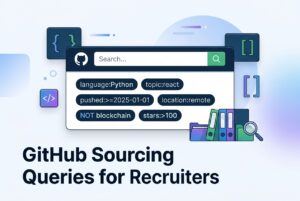
GitHub is strongest when the role depends on work you can inspect. That makes it a good fit for software engineers, developer advocates, DevOps, security researchers, and technical founders. Recent commits, pull requests, issues, and documentation all matter more than stars or follower counts.
The main risk is assuming public visibility equals outreach permission. It does not. GitHub also has rate limits on API access, and its acceptable-use policy restricts spam and unsolicited recruiting-style collection. So use it as an evidence source, validate identity elsewhere, and contact through an appropriate business route.
Kaggle and Behance
Kaggle works best when the role needs reproducible data work. Behance works best when the job depends on visible craft. Both are strong LinkedIn sourcing alternatives because they show output, not just claims.
However, they answer different questions. Kaggle tells you how someone approaches data. Behance tells you how someone presents visual work. Neither one tells you everything about availability, compensation, or work authorization. So they are great for discovery, but weak as stand-alone hiring proof.
Wellfound, Meetup, and job boards
Wellfound is useful when startup intent matters. Meetup is useful when community and geography matter. Job boards are useful when you need active applicants and a predictable flow.
The trick is to avoid overreading intent. A startup pool is still a pool. A Meetup member is still a member. A job-board applicant is still an applicant. Freshness and fit need to be checked before outreach.
Freshness is not the same as visibility
Freshness is a hiring variable, not a platform label. A profile can be indexed and still be stale. A candidate can also be active without looking active at first glance. That is why candidate sourcing should always separate freshness from signal quality.
Use a simple three-band rule:
- Fresh: recent job change, application, contribution, event participation, portfolio update, or stated availability
- Uncertain: relevant evidence, but no recent signal
- Stale: old evidence or contradictory current-employer information
That rule applies across talent pools. For a software engineer, recent repository activity may justify priority. For a designer, a recently updated portfolio is often more useful. For an active applicant, the application timestamp shows intent, but not quality. For a Meetup member, recent participation shows community activity, not job-seeking intent.
So before outreach, verify current employer, role, geography, and preferred contact route. Also store a last-verified date in the ATS or Recruitment CRM, and suppress records that bounce or opt out. That small discipline saves a lot of bad follow-up later.
When a sourcing platform makes sense
A sourcing platform makes sense when the problem is not “where do I search?” but “how do I manage several pools without losing control?” For a lean TA team, that usually means cross-channel discovery, semantic search, ranking, deduplication, rediscovery, and workflow automation.
CVViZ offers that kind of sourcing layer. It provides AI candidate sourcing, contextual candidate matching, multi-source sourcing, AI-powered candidate ranking, candidate database rediscovery, a Chrome extension, and API-based integration with existing ATS or HR systems. It also supports multi-channel job posting and candidate communication workflows.
That matters because the best LinkedIn sourcing alternatives are rarely used in isolation. A sourcing platform helps you search across them, rank what matters, and keep records clean. Just do not confuse tooling with compliance. The tool does not make a channel compliant by itself.
What CVViZ can help with
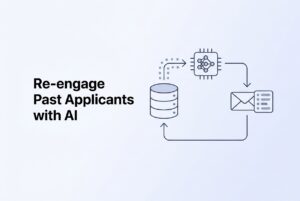
CVViZ enables a recruiter to discover candidates across public websites, social platforms, specialized platforms like GitHub, and integrated job boards. It also helps re-engage past applicants from an existing database. For a mid-market TA leader, that means one workflow instead of a pile of disconnected tabs.
Just keep the operating rule tight:
- human review before outreach
- suppression for do-not-contact
- channel-specific rules
- one-to-one personalization tied to a real role or artifact
That is how candidate sourcing stays fast without getting sloppy.
A practical 30-day test
If you want to test LinkedIn sourcing alternatives without creating chaos, run a short pilot. Pick two roles with different signal needs, such as a backend engineer and a product designer.
Week 1: define the rules
Set must-have skills, acceptable adjacent skills, freshness fields, excluded data, contact rules, and success metrics. Create a suppression list and a shared source taxonomy. This gives the team one standard language.
Week 2: build searches by channel
Use GitHub for the engineer. Use Behance for the designer. Use Wellfound for startup-intent prospects. Use one job board for active applicants. Use Kaggle only when the role genuinely needs data evidence. Use Meetup as a community tactic, not a harvested list.
Week 3: review before outreach
Human-review every shortlist. Mark records as fresh, uncertain, or stale. Remove duplicates. Verify current role. Record the evidence that justified contact. Then send a small, personalized batch.
Week 4: compare yield and risk
Track qualified-candidate rate, positive reply rate, interview rate, hire progression, time to first qualified slate, cost per qualified candidate, and opt-out or bounce rate. Keep the channel only if it produces good candidates without bad outreach risk.
What mid-market TA teams should remember
The best answer to “Where should I source if LinkedIn is saturated or expensive?” is not a single site. It is a mix of talent pools built around role evidence, freshness, and outreach permission.
Use GitHub for software evidence. Use Kaggle for data evidence. Use Behance for visual craft. Use Wellfound for startup intent. Use Meetup for local relationships. Use job boards for active demand. Then use a sourcing platform when you need to unify discovery, ranking, and database rediscovery.
That is the cleaner operating model. It gives you better signal, less noise, and fewer awkward messages you wish you had not sent.
FAQs
What is the best LinkedIn sourcing alternative for software engineers?
GitHub is usually the strongest specialist option when the role values public code or open-source work. Use recent, relevant repositories and contribution context as evidence, then validate experience and contact permission before outreach.
Is Wellfound better than a job board for startup hiring?
It can be, when startup intent matters. Wellfound gives you a startup-focused pool and built-in sourcing workflows. A job board is still useful for active applicants and volume, so compare qualified screens, not raw applications.
Can Kaggle rankings replace a technical interview?
No. Rankings and notebooks are useful work samples, but they do not prove production engineering, communication, deployment, or job availability. Use Kaggle to improve the evidence stage, then run a structured interview.
Is Behance suitable for full-time hiring?
Yes, it can help discover designers. However, its core workflow is project and freelance oriented, so you should confirm employment intent, availability, and terms separately.
Can recruiters message Meetup members directly?
Not as a recruiting blast. Commercial, unsolicited, impersonal, repetitive, and overly promotional messages are reportable. Build a relationship through relevant events and invite people to a clearly described conversation.
Are public profiles safe to scrape for recruiting?
No universal answer exists. Platform terms, API rules, privacy law, and intended use all matter. Use approved APIs or native workflows, collect only necessary data, and get legal review for the operating regions.
What should a lean TA team automate first?
Automate deduplication, profile import, structured source tagging, reminders, interview scheduling, opt-out suppression, and reporting. Keep human review for identity, freshness, relevance, and final outreach decisions.