AI For Recruiting - A Complete Guide
The recruiter’s guide
Understand where AI supports sourcing, screening and candidate follow-up, how it connects to your ATS, and what recruiters should review before acting.
For recruiters and hiring teams · Updated 31 August 2026
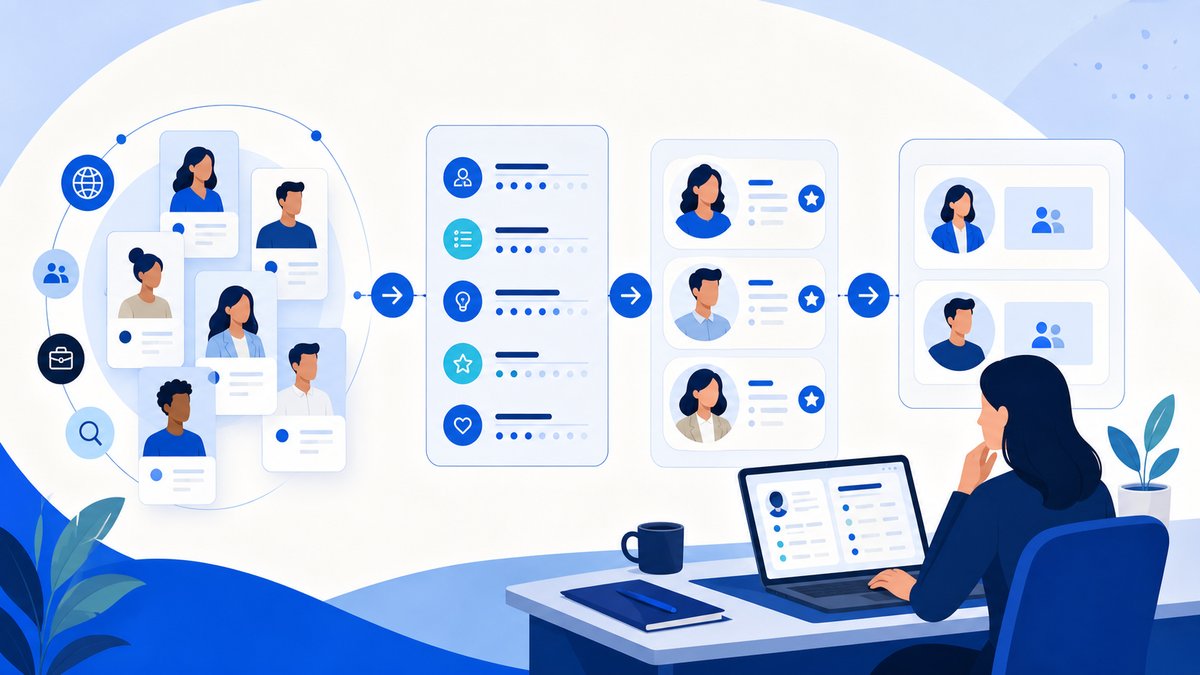
A connected recruiting workflow
Find
Discover applicants and relevant people already in your talent pool.
Evaluate
Compare the role with evidence recruiters can review.
Move forward
Connect approved outreach, interviews and the next human decision.
AI assists. People remain accountable for decisions.
Applicant tracking system (ATS) was the first successful step in recruitment automation. It came live in 90’s. ATS made recruiter’s life easy by automating mundane tasks like organizing resumes, maintaining progress of candidates throughout hiring process, etc. It helped recruiters in getting organized.
Today, the demand is to automate processes intelligently, smartly. Just like AI picking up in other sectors, HR technology is also adopting to AI for recruitment and other processes. While modern recruiting software coming up with AI solutions, traditional recruiting solutions like ATS are integrating with AI solution providers.
AI recruiting in 2025: adoption, time and quality
of talent acquisition professionals agree AI will change how organisations hire.
are experimenting with generative AI or actively integrating it into hiring.
LinkedIn’s 2025 Future of Recruiting report surveyed 1,271 recruiting professionals in management roles across 23 countries in September 2024. It found that 73% agree AI will change how organisations hire, while 37% are experimenting with generative AI or actively integrating it into hiring.
Recruiting professionals already using or testing generative AI reported saving an average of 20% of their workweek. The same research found that 89% expect quality-of-hire measurement to become more important, while only 25% feel highly confident that their organisation can measure it effectively.
SHRM’s 2025 AI in HR research reports that 51% of organisations using AI in HR apply it to recruiting, making recruiting the most common HR use case in that study.
What is AI For Recruiting ?
AI for recruiting is the application of artificial intelligence to smartly automate various stages of recruitment process. AI allows you to mimic the behavior of domain experts at different stages of the recruiting process.
AI for recruiting can improve your productivity and effectiveness at stages like candidate sourcing, resume screening and candidate interviewing.
The new visual maps a current AI-assisted workflow from candidate discovery to structured review and the next recruiter-led decision.
HOW AI HELPS IN RECRUITING ?
AI For Resume Screening
Resume screening is still a manual task for many teams, and a large share of incoming applications may not meet the agreed role requirements.
Natural language processing and machine learning can compare resumes with job-related criteria, surface relevant evidence and help recruiters prioritise review. Recruiters should inspect the evidence, confirm missing or unclear information and make the shortlist decision.
Traditional ATS products mainly organise candidate records and workflow. Modern AI-enabled ATS products can add contextual matching and ranking, while simple keyword matching can still produce misleading results.
AI For HR chatbots
HR chatbots built using NLP, machine learning can strike a conversation with candidates. It can be used for candidate sourcing as well as candidate prescreening.
If you already have a candidate database, a text based chatbot can initiate a message trail with passive candidates to know if they are interested in job openings. Similarly interested candidates can be pre-screened using basic or advanced screening questions.
Pairing AI for both resume screening and then for chatbots can bring magic. Resume screening will find most suitable candidates and then chatbots can reach out to these candidates.
These HR chatbots or recruiter chatbots also improves candidate experience through the hiring process. For example, candidates are kept posted regularly about their progress, interview schedule, etc.
AI For Video Interviewing
There are tools that uses AI to assess candidates based on their behaviors during the interview process. These tools claim to use different aspects such as body language, pitch tone, eye movements, facial expression, etc to find personality traits of the candidate.
AI For Candidate Sourcing
Sourcing candidates using various integrations or web search is more of a Robotic Process Automation (RPA). However, post sourcing candidates, AI can be used to find most suitable candidates for the role.
AI For Writing Job Descriptions
AI could help you remove biased languages in the job descriptions. We many times do not realize that language that we use in job descriptions could potentially make audience loose interest in the job. For example, using something like “we are looking for Machine learning rockstars” does not appeal to women job seekers. Textio is one such platform that helps you write appropriate and appealing job descriptions.
Benefits Of Using AI
Saves Huge amount Of Time
AI-assisted screening can reduce repetitive review work and give recruiters more time to engage suitable and interested candidates.
Chatbots and configured automations can also support prescreening, sourcing and follow-up. Recruiters should approve the questions, define the handoff and review the resulting evidence before deciding what happens next.
Insights That Save Money and Time
AI for recruiting helps you gather critical data points that gives great insights into your hiring process. It could reveal which sourcing or hiring channels are great for which kind of positions.
For example, you could find out if LinkedIn is better social platform or Facebook to market your Sales job. Is it Github or Stackoverflow that gives you better matching Python developers. Which recruitment agency works best for you and many more. This helps you budget your recruitment finances wisely. This also helps you to focus your efforts in the right direction.
Improves Quality of Hire
Traditional recruitment practice runs on first come first basis. You generally source the bunch of resumes and then screen those. Or vice a versa. However, this is done in bits and pieces.
Also, everyone including your competition is also looking at the same set of candidates. You need to be more agile and quick in order to reach to quality candidates. Using AI for recruiting you could identify quality candidates much early in the hiring process. This gives you an opportunity to engage better talent much sooner.
Learn More About A.I. For Recruiting
Resume screening is the most critical task. AI can be your domain expert when it comes to screening resumes. It helps you identify best candidates much earlier in the hiring process.
It’s time to get more familiar with different AI related terms. Know elements of A.I. that are making recruiters job easier.
AI is making great progress in talent acquisition process. It is helping recruiters and hiring mangers at different stages of recruitment.
What all a AI recruiting software could offer ? Is it going to change the way recruitment process has been working?
A practical AI recruiting checklist
Start with one repeatable workflow. Define the inputs, review point and outcome before adding more automation.
-
Define the role
Agree essential skills, useful experience and job-related questions. Separate requirements from preferences and decide how missing information will be checked.
-
Connect candidate intake
Bring applicants and sourced prospects into a working record. Search known talent and confirm job-board eligibility before distribution.
-
Review screening evidence
Compare prioritised resumes with the agreed criteria. Inspect lower-ranked profiles too, and check unclear information before shortlisting.
-
Approve communication
Set messages, questions and cadence. Define when a conversation goes to a recruiter and respect applicable channel requirements.
-
Coordinate and decide
Keep scheduling, answers, notes and feedback together. Recruiters and hiring managers record the reason for the next action.
-
Measure and improve
Compare effort, time to first contact, interview progression and drop-off with your baseline. Review errors before expanding automation.
| Stage | Evidence | Recruiter question |
|---|---|---|
| Source | Profile and role requirements | Who merits an approach? |
| Screen | Resume and prescreening answers | What needs confirmation? |
| Interview | Assessment evidence and feedback | What action is supported? |
Use AI responsibly in the hiring workflow
Meaningful human review
Give reviewers information, time and authority to question recommendations and change the next action.
A clear candidate experience
Explain how automation is used, what information matters and how candidates can seek help or raise concerns.
Fairness and accessibility
Use job-related criteria, check unintended exclusions and provide an accommodation route. Consistency alone does not establish fairness.
Careful data handling
Confirm what data is needed, who can access it, how long it is kept and how it moves between systems.
Requirements vary by location and use case. Review the current rules that apply to your organisation. Further guidance: ICO and EEOC.
AI recruiting: frequently asked questions
How does AI recruiting differ from recruitment automation?
Automation carries out configured steps, such as reminders. AI can help interpret information, find relevant profiles or compare evidence. A platform can combine both with core ATS features.
Does AI recruiting replace recruiters?
It can reduce repeated administrative work. Recruiters still define the role, check evidence, understand candidate circumstances and make hiring decisions.
Can AI recruiting work with an existing ATS?
Yes. CVViZ offers selected AI integrations as well as a complete ATS. Confirm supported systems, fields, actions and implementation scope for your setup.
Is AI recruiting automatically unbiased?
No. Data, criteria and deployment can introduce unfair exclusions. Review job relevance, accessibility and outcomes, and give recruiters authority to question recommendations.
Can AI help us re-engage known candidates?
Talent rediscovery brings potentially relevant past applicants into consideration for new roles. Check information is current, confirm interest and use appropriate outreach.
How should we evaluate AI recruiting software?
Use a representative role and agreed success measures. Inspect recommendation evidence and mistakes, compare outcomes with your baseline, and confirm integrations, data handling and plan availability.
Explore the current CVViZ workflow
Resume screening guide
Build a clearer process from criteria to shortlist.
AI candidate sourcing
Explore discovery and recruiter-approved outreach.
AI applicant tracking system
Connect candidate records, communication and hiring stages.
Explore the current feature guide and integration options. Historical article links above remain from the original reading list.