If your recruiting team is still treating job posting, candidate sourcing, and screening as separate motions, the process will stay messy no matter how many tools you buy. The scalable model is simpler: one role definition, many attraction paths, one normalized candidate pool, contextual AI resume screening, and human review routed by clear rules. It is the real job of recruitment automation software. It is not to replace recruiters. It is to stop candidates from disappearing between systems.
For a lean TA team, this matters because the pain is almost always the same. A job gets posted everywhere, sourced profiles live in browser tabs, applications land in inboxes and board accounts, and the shortlist is built from whatever the team can see first. Good people get missed, managers keep asking for updates, and recruiters spend too much time moving data around instead of making hiring calls.
What is broken in the conventional recruiting workflow?
The core problem is not lack of reach. It is lack of continuity. Most teams have channels, but they do not have a single candidate flow that connects those channels to screening and decision-making.
A common pattern looks like this:
- A requisition is copied to several boards and a career page.
- Applications arrive in the ATS, email, or board-specific accounts.
- Recruiters source passive candidates in separate tabs and platforms.
- Profiles get copied manually, often with duplicates and missing fields.
- Screening happens through keyword search or a quick first-batch review.
- Hiring managers get partial updates because no one source contains the full picture.
- Silver medalists and past applicants are forgotten when the next role opens.
That is how a team can get 300 applications for a remote role and still review only the first 50. It is also how a recruiter spends the day reconciling spreadsheets instead of talking to people. The issue is not the lack of candidates. It is the lack of a workflow that makes every candidate searchable, attributable, and comparable.
In practical terms, the work should answer six questions:
- How do we create a relevant candidate pool?
- How do we find people who are not already applying?
- How do we make every candidate discoverable and attributable?
- Who is most relevant, and why should a recruiter review them next?
- What should happen automatically after each event?
- Which sources actually produce qualified hires?
That is one workflow, not six disconnected tools.
Why existing approaches fail
The usual failure is not subtle. Teams buy for one part of the process and then keep running the rest by hand. Here is where that breaks down.
Why posting to multiple boards alone does not scale
Multi-board posting increases reach, but it does not create a unified screening process. Without source capture and deduplication, the same person can show up as an applicant, a sourced profile, and a referral. Without shared records, the team cannot tell which channels actually produce qualified candidates.
Why sourcing and screening break when they live in different systems
Sourcing tools often create profiles while the ATS tracks applicants. If sourced records are not imported, parsed, and matched against the same job, recruiters end up with two pipelines. Passive candidates become invisible to hiring managers, and prior applicants cannot be compared fairly with newly sourced people.
Why keyword filtering is too shallow on its own
Boolean search is useful for exact strings, titles, certifications, and hard constraints. It is not enough as the only evaluation layer. Equivalent skills get expressed in different language, and contextual evidence does not always repeat the wording of the job description. If the team treats keyword repetition as the definition of fit, it will miss people who can do the work.
Why “AI screening” becomes a problem when it is opaque
A score is not a hiring decision. A threshold is not automatically valid. If the screening model is treated like a black box, it can overvalue familiar career paths or use proxies that are not actually required for the job. That is a real risk for nontraditional candidates. The fix is not to avoid AI resume screening. The fix is to use it as prioritization, with human review still in control.
Why automation must be tied to decisions
Sending an acknowledgment email is useful. But the bigger value comes when a trigger leads to the next action: assign a recruiter, move a candidate to review, alert on an unreviewed resume, or send an interview link. If automation only sends messages, it saves a little time. If it moves work forward, it changes throughput.
Introduce your framework: Connected Candidate Flow
The scalable model is Connected Candidate Flow. It is simple on purpose.
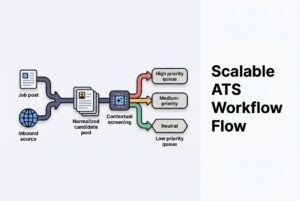
The idea is this: every attraction channel feeds one normalized candidate record, and every screening step sits inside one decision workflow. Job posting automation creates reach. Candidate sourcing adds passive talent. The ATS becomes the control plane that makes both measurable and actionable.
The six stages of Connected Candidate Flow
- Define
Turn the hiring need into structured requirements, knockout questions, and a scorecard. - Distribute
Publish one requisition to the career page and the right boards while preserving source attribution. - Discover
Find active and passive candidates through the web, social platforms, specialist sites, referrals, email, and the existing database. - Normalize
Parse resumes and profiles into one schema, detect duplicates, store provenance, and make the pool searchable. - Assess and route
Apply contextual AI resume screening and relative ranking, then send candidates into high, medium, low, or exception paths. - Advance and learn
Move qualified candidates through communication, interviews, feedback, and decisions, then feed the outcomes back into source analytics and rediscovery.
Visual model
                        ┌──────────────────────────────┐
                        │ 1. DEFINE THE ROLE           │
                        │ outcomes • must-have • plus  │
                        │ knockouts • scorecard        │
                        └──────────────┬───────────────┘
                                       │ one requisition
                   ┌───────────────────┴───────────────────┐
                   │                                       │
       ┌───────────▼───────────┐               ┌───────────▼───────────┐
       │ 2. DISTRIBUTE          │               │ 3. DISCOVER             │
       │ career page • boards   │               │ web • social • referral │
       │ free/paid • source tag │               │ past candidates • email │
       └───────────┬───────────┘               └───────────┬───────────┘
                   └───────────────────┬───────────────────┘
                                       ▼
                        ┌──────────────────────────────┐
                        │ 4. NORMALIZE                  │
                        │ import • parse • deduplicate  │
                        │ source • consent • search     │
                        └──────────────┬───────────────┘
                                       ▼
                        ┌──────────────────────────────┐
                        │ 5. ASSESS AND ROUTE           │
                        │ contextual match • rank       │
                        │ high / medium / review queue  │
                        └──────────────┬───────────────┘
                                       ▼
                        ┌──────────────────────────────┐
                        │ 6. ADVANCE AND LEARN          │
                        │ human review • outreach       │
                        │ interviews • feedback • hire  │
                        └──────────────┬───────────────┘
                                       │
                   ┌───────────────────▼───────────────────┐
                   │ analytics • source quality • rediscovery│
                   │ feed evidence back into the next req   │
                   └───────────────────────────────────────┘
The important part is the merge point. Applicants and sourced candidates should enter the same normalized pool before screening. The entry path can differ. The quality definition should not.
How should a team define a job before automating it?
Define the role before you automate it. Separate mandatory criteria from preferred ones, and turn each requirement into observable evidence. The job description, application questions, and screening criteria should all describe the same role.
A good intake should include:
- the business outcome the hire must deliver
- required skills, tools, licenses, or work authorization
- acceptable equivalent experience and transferable skills
- preferred skills that improve ranking but do not eliminate a candidate
- level, scope, and relevant experience
- location, remote or hybrid conditions, and travel
- compensation range if your organization uses one
- knockout questions for legal or operational requirements
- interview scorecard and decision owners
- recruiter and hiring-manager response SLAs
Use three buckets: must-have, strong signal, and nice-to-have. That keeps a missing preferred keyword from becoming the same thing as a failed legal requirement. It also prevents bad proxies from sneaking into the process, like prestige school or unexplained career-gap rules when they are not tied to job performance.
A better definition sounds like this: “Has designed and operated distributed systems handling a defined production workload; equivalent experience accepted.” A weaker one sounds like this: “Must have used the exact title and exact phrase from the posting.” One is evidence-based. The other is just a copy of the job ad.
What does job posting automation actually automate?
Job posting automation turns one approved requisition into multiple consistent listings, a trackable career-page application path, and a source-aware intake process. It automates distribution and capture. It does not guarantee quality or search visibility.
The right sequence is straightforward:
- Approve the structured requisition.
- Choose the boards that fit the role and location.
- Publish from one source of truth.
- Send every listing into the same application flow or mapped endpoint.
- Preserve the exact board and campaign source.
- Track applications, qualified screens, interviews, offers, and hires by source.
- Close or expire the job everywhere when it is no longer open.
CVViZ’s public materials describe distribution across more than 1,500 job sites in one place and more than 2,000 job-board integrations or partnerships in another. Its free-board language also varies between 15-plus and 20-plus. That means the live catalog should be confirmed before publication rather than assumed from a single page.
The product material also says some paid listings may carry discounts of up to 40%. It names popular, niche, and diversity boards, and it references LinkedIn, Indeed, and Glassdoor in different places. The exact current board inventory, country eligibility, and live pricing by board are not fully published.
A useful rule here is simple: measure source by conversion, not by volume alone. A board that creates a lot of applications but few qualified screens is not necessarily a good source.
How should candidate sourcing connect to inbound applications?
Candidate sourcing should not create a second candidate universe. It should feed the same ATS pool, source taxonomy, communication history, and screening workflow as inbound applicants.
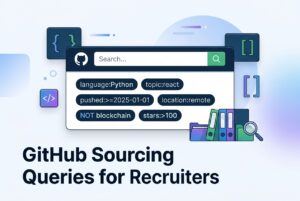
That means sourcing is an input method, not a destination. The candidate may come from web search, LinkedIn, GitHub, Stack Overflow, Behance, referrals, hiring-manager recommendations, a recruiting inbox, a browser import, or an old talent pool. The discovery method changes. The evaluation model should not.
A clean handoff looks like this:
- profile found
- provenance recorded
- consent or communication status recorded
- duplicate check run
- record parsed into the candidate schema
- candidate attached to the role or talent pool
- screening and routing applied
A bad handoff is a spreadsheet copy with no source attribution, no duplicate check, and no link to future funnel metrics. That is how teams lose context and repeat work.
CVViZ publicly describes web sourcing, job boards, GitHub, Stack Overflow, Behance, LinkedIn, Facebook, email imports, and Chrome extension imports from boards such as Dice, Indeed, and Monster. It also describes recommendations based on job industry, role, and location. The public material does not prove unrestricted scraping or universal availability in every market, so the safer language is “supported channels and platform-permitted methods.”
Why are parsing, deduplication, and search the hidden scaling layer?
Parsing and deduplication make candidates comparable. Search makes the accumulated database reusable. Without them, AI screening only improves the records that happen to reach it, while the organization keeps recreating the same sourcing work.
A normalized candidate record should preserve:
- name and contact details where permitted
- work history, titles, dates, industries, and scope
- skills, certifications, education, and languages
- source type, exact source, discovery date, and campaign
- resume or profile provenance and original document
- consent, communication status, and suppression status
- duplicate or merged-record history
- roles considered, screening outcomes, interviews, feedback, and disposition reasons
CVViZ describes AI resume parsing, email and browser imports, duplicate candidate detection, cloud resume storage, full-text search, Boolean operators, filters, and semantic search across the resume database and sourcing pipelines. It also describes export to JSON, XML, Excel, and CSV through the parser API.
Use Boolean search for exact constraints and semantic or contextual search for meaning, related skills, and relevance beyond literal wording. Do not confuse that with a claim about vector databases or a particular model architecture. The public material does not specify that.
This layer is where a lot of teams finally stop rebuilding the same spreadsheet every quarter. The value is not flashy, but it is real.
What is contextual AI resume screening and how should it route people?
Contextual AI resume screening evaluates a candidate in relation to the job, not just against keyword frequency. It should prioritize recruiter attention, not silently make the final hiring decision.
CVViZ publicly describes screening factors such as skills, job titles, years of experience, industry background, career progression, education, certifications, transferable skills, and overall contextual relevance. It also describes automatic parsing, ranking, shortlisting, and relative ranking. Relative ranking matters because the same candidate can rank differently for different roles.
A practical routing model is below:
| Route | Evidence | Recommended next action |
|---|---|---|
| High match | Strong evidence against must-haves and relevant context | Recruiter review, shortlist, or personalized outreach; do not skip human review |
| Medium match | Some strong evidence, missing or ambiguous evidence, or transferable experience | Review queue; inspect the original resume or profile and clarify where needed |
| Low match or knockout | Fails a documented requirement or lacks enough evidence | Use a validated knockout process and keep an exception path for ambiguous cases |
| Unreadable or insufficient record | Parser failure, incomplete profile, or duplicate conflict | Repair the record before deciding |
CVViZ’s workflow material includes examples of high, medium, and low routing, but it does not publish a universal numeric threshold or score formula. So the right way to use it is role-specific calibration, not “reject below 70.”
The product material also says it removes personal information such as names, locations, and ethnicity before evaluation. That may reduce some direct signals, but it does not prove the model is bias-free. Work history, school, geography, gaps, and language can still act as proxies. Human audit still matters.
How do workflow automation and human review work together?
Automate the predictable parts and leave judgment to accountable people. That is the clean rule.
The best ATS workflow automation handles triggers like:
- candidate applies → send acknowledgment
- resume received or job added → send notification
- AI score crosses a threshold → notify or assign a recruiter
- candidate meets pre-screen criteria → move to Shortlisted
- candidate is a medium match → move to Review Queue
- candidate status changes → send the right stage communication
- resume stays unreviewed → alert the recruiter or hiring manager
- candidate qualifies → send an assessment or interview link
- interview stage begins → send scheduling links and reminders
- candidate is rejected → send the appropriate communication
- candidate is not yet right for the role → move to a talent pool
CVViZ’s public material also describes calendar sync, scheduling links, panel invitations, virtual interviews, reminders, email templates, bulk communication, campaigns, follow-ups, and open or reply tracking. That is enough to reduce admin work without pretending the system can replace decision-making.
Every rule should specify trigger, condition, action, owner, exception, suppression logic, and audit record. If a resume parser misses a section, or a candidate falls below an unvalidated threshold, the system should not fire a blind rejection. That is how you keep automation useful instead of sloppy.
ATS versus Recruitment CRM
The clean distinction is simple: the ATS manages the application and hiring workflow, while the Recruitment CRM manages pre-application relationships and talent pools. In practice, good systems overlap. The question is whether the candidate’s source, consent, outreach, and screening history stay connected when a sourced person becomes an applicant.
| Question | Applicant Tracking System (ATS) | Recruitment CRM |
|---|---|---|
| Primary job | Manage requisitions, applications, stages, interviews, decisions, and compliance records | Build and nurture relationships with passive, prospective, past, and referred talent |
| Typical starting event | A job is approved or a candidate applies | A recruiter discovers a person before an application exists |
| Core record | Job, application, stage, disposition, interview, feedback, offer | Person, relationship, outreach, talent pool, campaign, engagement history |
| Best workflow | Publish, intake, screen, interview, decide, hire | Discover, segment, contact, nurture, rediscover, convert to applicant |
| Main risk when separate | Sourced profiles disappear before application | Relationship history gets disconnected from the final hiring record |
| Scalable connection | Source history stays attached when the person enters the ATS | CRM activity becomes an upstream input to the ATS workflow |
That is the real operating question for a mid-market team: do we have one decision path, or do we have two systems that only sort of talk to each other?
How CVViZ maps to the Connected Candidate Flow
CVViZ is publicly described as AI recruiting software that combines ATS workflow, candidate sourcing, AI resume screening, recruitment CRM, and hiring automation. Here is the practical mapping.
| Workflow need | Publicly described CVViZ capability | Editorial caveat |
|---|---|---|
| Distribute a requisition | One-click posting to paid and free boards; career-page job links; named channels include LinkedIn, Indeed, Glassdoor, Google Jobs, and niche or diversity boards | Official pages disagree on total board counts; verify the live catalog and local eligibility |
| Capture applications | Career page, job-board listings, and email resume imports | Full inbound-field limits are not published |
| Source candidates | Web sourcing, job boards, LinkedIn, GitHub, Stack Overflow, Behance, Facebook, email, and browser extension imports | Platform coverage and permissions are not fully published |
| Parse and deduplicate | AI resume parsing, candidate-data extraction, duplicate detection, cloud storage, and a central talent pool | Accuracy by format or language is not published |
| Search and rediscover | Full-text search, Boolean search, filters, Elasticsearch, semantic search, and matching against the existing database | Ranking formula and API limits are not published |
| Screen and rank | Contextual AI evaluates skills, experience, relevance, progression, education, certifications, and transferable skills | No universal threshold or scoring formula is published |
| Automate routine work | Rules and triggers for applications, score thresholds, status changes, unreviewed resumes, notifications, assignments, emails, interview links, reminders, and review queues | Exact UI limits and the full integration list are not published |
| Interviews | Scheduling links, calendar sync, video interviews, panel invitations, reminders, and an inbuilt live code editor | Exact calendar-provider limits are not fully specified |
| Analytics | Time to fill, effective sourcing channels, screening quality, recruiter productivity, candidate quality, and exportable reports | Metric start and end points must be defined by the buyer |
| Integration | Email, calendars, websites, job boards, API access, SSO on higher plans, and Chrome extension imports | Complete connector coverage and migration timelines are unknown |
| Privacy | GDPR toolkit, role-based access, encryption, AWS Europe-region storage, and data-subject rights | The customer still owns controller duties |
That is enough to understand the product without turning this into a feature parade.
How should a lean TA team measure success?
Measure the funnel, not just applicant volume. More applicants are not the point. More qualified progress through the process is the point.
Here are the core metrics worth defining before you compare periods or sources:
Here are the core metrics worth defining before you compare periods or sources:
| Metric | Recommended definition |
|---|---|
| Time to first review | Open requisition or candidate arrival to first documented human review |
| Time to screen | Candidate arrival to completed recruiter screen |
| Time to interview | Candidate arrival to first scheduled interview |
| Time to hire | Candidate entry to accepted offer |
| Time to fill | Requisition opening to accepted offer or start date, chosen consistently |
| Source-to-screen rate | Qualified screens from a source divided by candidates from that source |
| Source-to-interview rate | Interviews from a source divided by candidates from that source |
| Source-to-hire rate | Hires from a source divided by candidates from that source |
| Cost per qualified candidate | Channel spend divided by qualified screens |
| Recruiter review time | Human minutes spent per candidate or requisition |
| Automation completion rate | Successful automated actions divided by triggered actions |
| First-response SLA | Time from application or outreach to acknowledgment or next step |
| Hiring-manager SLA | Time from assignment or feedback request to manager action |
| Rediscovery rate | Reopened or re-engaged candidates from the existing pool divided by candidates considered |
| Quality of hire | Post-hire performance, retention, ramp, or hiring-manager assessment measured consistently |
For AI screening specifically, add quality controls such as precision at K, false-negative audits, rank agreement, coverage, exception rate, and disposition completeness. Those are the metrics that tell you whether the model is actually helping, not just sorting faster.
A sensible pilot is to baseline for a few weeks, test two or three representative roles, inspect the high, medium, and low groups, and revise criteria one step at a time. Faster is not automatically better unless quality holds up.
What does a practical rollout look like for a lean team?
Start with the current flow, not the future fantasy.
Phase 1: Map the current process
Document where each candidate enters, who touches the record, which fields get lost, and when the hiring manager is notified. Inventory boards, inboxes, spreadsheets, browser extensions, ATS fields, calendars, interview tools, and exports.
Phase 2: Standardize the requisition and scorecard
For two or three pilot roles, define must-haves, strong signals, preferred evidence, knockout questions, acceptable equivalents, and reviewer ownership. Write down what would justify an override.
Phase 3: Connect the intake paths
Publish the job once, connect the career page, import resumes from email, and use supported sourcing mechanisms. Every record should receive a source, timestamp, job or pool association, and duplicate check.
Phase 4: Configure rules with safeguards
Start with low-risk automations: acknowledgment, recruiter notification, interview scheduling, overdue feedback reminders, and stage communication. Then add evidence-based routing for strong, medium, and exception cases.
Phase 5: Measure and calibrate
Review source-to-screen, source-to-interview, time to first review, manager feedback delay, recruiter review minutes, parser failures, duplicate rate, and false-negative examples weekly during the pilot.
Phase 6: Scale and rediscover
Once the flow is stable, add more roles, more talent pools, email campaigns, and rediscovery alerts. Keep an exception path for nontraditional candidates, data errors, and suppression requests.
The rollout only works if recruiters actually use it. So keep the dashboard simple, the mandatory fields minimal, and the override path visible. If people cannot tell where the candidate is, the system has already failed.
FAQ
What is an integrated ATS recruiting workflow?
It is a workflow where job distribution, candidate sourcing, resume and profile intake, parsing, deduplication, screening, communication, interview scheduling, feedback, and analytics use shared candidate and requisition records. The point is to remove handoffs that make candidates disappear.
How is job posting automation different from candidate sourcing?
Job posting automation distributes an approved role and captures applicants. Candidate sourcing proactively discovers people who may never apply. Both should feed the same candidate database and screening model.
Does posting to more boards guarantee better hiring?
No. Reach is only upstream volume. Source quality depends on the role, location, candidate supply, and funnel conversion. Measure qualified screens, interviews, offers, hires, and quality by source.
What is AI resume screening?
It is software-assisted extraction and evaluation of resume or profile evidence against the role. Contextual screening considers relevance, progression, and transferable evidence. It should prioritize human review, not replace it.
Can contextual matching replace Boolean search?
No. Boolean search is still useful for exact constraints and transparent filters. Contextual matching adds relevance for alternate wording and transferable experience. The strongest workflow uses both.
How does relative candidate ranking work?
It orders candidates for a specific role and comparison set. The same person can rank differently for different jobs, so the rank is a review priority, not a permanent label.
What should happen to medium-match candidates?
They should stay visible in a review queue with the original record attached. Medium matches often contain the most useful nontraditional evidence.
Can an ATS also be a recruitment CRM?
Some platforms combine both. The test is whether outreach, sourcing, consent, and screening history stay connected when a sourced person becomes an applicant.
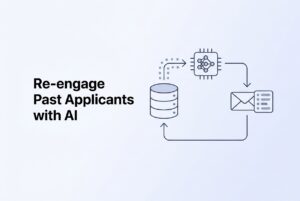
How do teams re-engage silver medalists?
Keep the prior role, feedback, and disposition context, re-rank the pool for the new role, confirm current relevance and contact permissions, then send a truthful targeted message.
Does Google for Jobs guarantee visibility?
No. A crawlable single-job page with the right structured data can be eligible for the job search experience, but appearance is not guaranteed. Expired roles should be removed or marked expired.
Can CVViZ be added to an existing ATS?
CVViZ publicly lists API access and an Integrate offering for resume screening, matching, and ranking. The reviewed material does not publish complete connector coverage, rate limits, or migration timelines, so the integration path should be validated before promising an overlay.
Is CVViZ GDPR-compliant?
Its public GDPR page says it acts as a data processor and describes rights such as access, rectification, erasure, and portability. The customer still owns controller duties and the legality of the recruiting process.
The takeaway
The scalable recruiting model is not “more tools.” It is one role definition, many attraction paths, one normalized candidate pool, contextual prioritization, accountable human review, automated handoffs, and a feedback loop that improves the next search.
That is how recruiting should be run. CVViZ is one way to implement it, but the operating model comes first.