If you are hiring engineers in 2026, the best AI recruiting software for technical hiring is not the tool that parses resumes fastest. It is the one that helps you source better candidates, rank them by skill fit, run structured interviews, and keep the pipeline moving without manual chaos.
That matters because the volume is real. Recruiters are processing about 291 applications per hire, developers are using AI tools heavily, and most employers plan to grow engineering headcount in the second half of 2026. In that environment, developer recruiting software has to do more than sort keywords. It needs contextual screening, GitHub and Stack Overflow sourcing, workflow automation, and code evaluation in one place.
What should technical hiring teams prioritize in AI recruiting software?
Technical hiring teams should prioritize five things: contextual AI resume screening, developer-native sourcing, structured interview workflows with code evaluation, workflow automation, and analytics. Those are the functions that reduce screening load and help you find better-fit engineers faster.
In practice, that means the software should rank candidates by skill fit, not just keyword overlap. It should pull from GitHub, Stack Overflow, and LinkedIn, not only job boards. It should also support a clean technical interview flow, whether that is a built-in live code editor or an integration with a dedicated assessment tool.
Here is the simple rule: if a platform only automates resume parsing, it will not solve technical hiring. You still have the sourcing problem, the interview problem, and the pipeline visibility problem. The better option is a system that connects the full workflow from application to shortlist to interview to decision.
For SMBs and smaller teams, CVViZ sits in that category as an AI-powered ATS with native sourcing, contextual ranking, a live code editor for video interviews, and hiring automation. That is useful because it gives a lean team structure without forcing them into a complex enterprise stack.
Why keyword screening falls short for engineering roles
Keyword screening is too brittle for technical hiring because it checks for words, not actual fit. Contextual resume screening is better because it looks at skills, experience depth, recency, and career pattern.
That difference matters a lot for engineers. A resume can list the right tools and still hide weak experience. Another candidate may describe the same work with different words and get missed by a keyword filter. For example, “built machine learning workflows” and “developed ML pipelines” are different phrases, but they can signal the same kind of work.
A strong AI resume screening software should normalize titles, extract skills, apply role-specific weighting, and then rank candidates relative to the job and to each other. CVViZ does this through a Parse, Normalize, Weight, Match and Rank, Explain flow. It also creates an A, B, and C shortlist, which is easier to work from than a pass-fail cutoff.
Keyword screening vs contextual screening
| Dimension | Keyword screening | Contextual screening |
|---|---|---|
| Logic | Does the resume contain these words? | Does the candidate appear to have done this work? |
| Output | Pass/fail | Ranked shortlist |
| Synonyms | Weak | Strong |
| Title variance | Weak | Strong |
| Keyword stuffing | Easy to game | Much harder to game |
| Best use | Simple filters | Skill-fit ranking |
For technical hiring, that ranking layer is the real value. It saves time, but more importantly, it helps recruiters avoid missing candidates who have the right background but use different language.
How should you source developers beyond job boards?
You should source developers from GitHub, Stack Overflow, and LinkedIn, then use job boards as a second layer, not the only layer. That is the practical answer in 2026 because the strongest candidates are often not waiting around on inbound applications.
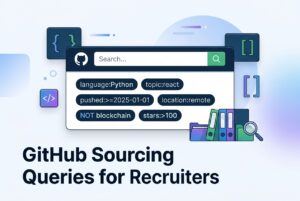
GitHub is especially useful because it gives you visible work signals: commit activity, language usage, contribution patterns, stars, followers, and organization affiliations. Stack Overflow is still useful too, but not as a job board. Its Jobs product was discontinued, so it now works better as a credibility and profile signal.
A good sourcing workflow looks like this:
- Search developer-native platforms.
- Review activity and contribution patterns.
- Cross-reference the profile with public signals on Stack Overflow or LinkedIn.
- Import the candidate into your talent pool.
- Re-engage strong prospects later through your own database.
CVViZ supports that kind of workflow through Find On Web and Social Hire, with sourcing from LinkedIn, GitHub, Stack Overflow, and other web channels. It also supports Chrome extension imports and duplicate detection, which helps when candidates appear in more than one place.
The biggest takeaway is simple: developer recruiting software should help you source where developers actually are. If it only posts jobs, you are still waiting for the market to come to you.
What interview workflow do technical roles actually need?
Technical roles need a structured interview flow, not just a recruiter screen and a generic hiring manager call. At minimum, you need a Level 1 screen, a coding assessment or live coding session, and a decision process that is consistent across candidates.
A practical technical workflow usually looks like this:
- application or sourcing
- AI contextual screening
- recruiter screen
- take-home or online coding assessment
- live coding interview
- system design interview for senior roles
- behavioral interview
- hiring manager debrief
The important point is that code evaluation belongs in the workflow, not as an afterthought. Some teams use a separate platform like HackerRank, CoderPad, or Codility. Others, especially smaller teams, prefer a built-in live code editor inside their ATS. CVViZ supports that second approach by combining video interviews with a live code editor.
That bundled setup is not for every team, but it is a strong fit for SMBs that do not want another vendor and another login just to interview developers. The tradeoff is depth. A dedicated assessment platform can offer more language coverage, more analytics, and more question variety. Still, for many growing teams, the simpler workflow is enough.

Do SMBs need a separate coding assessment tool?
Not always. If you run a modest number of technical interviews each month, a built-in live code editor may be enough. If you hire engineers at higher volume or need deeper assessment features, a dedicated coding platform can make sense.
Here is the clean way to think about it. Use a separate tool when code assessment is a major part of your hiring process and you need more robust reporting, anti-cheating controls, or broader exercise libraries. Use a bundled editor when your main need is to run live technical interviews without adding another system.
Coding assessment options in the recruiting workflow
| Tool | Primary use | Best for |
|---|---|---|
| HackerRank | Assessments plus live interviews | Enterprise tech hiring at scale |
| Codility | Assessments plus CodeLive | Teams that want strong reporting |
| CoderPad | Live interviews and screening | Live-coding-centric teams |
| CVViZ live code editor | Video interviews with embedded coding | SMBs that want one workflow |
The point is not to buy the “best” code tool in isolation. The point is to choose the setup that fits your hiring volume, team size, and process maturity.
What does workflow automation change for technical hiring?
Workflow automation cuts the repetitive work that slows technical hiring down. It handles routine actions like emails, notifications, status changes, and pre-screening question workflows, so recruiters do not have to manage every step manually.
This matters because technical hiring creates a lot of small tasks. Someone has to move candidates through stages, send reminders, follow up after screens, and keep hiring managers updated. When that work lives in spreadsheets and email threads, things slip.
With automation, the system can react to events like a new resume, a new job post, or a stage change. It can trigger follow-ups, status updates, and pre-screening flows. CVViZ supports that through rules and triggers-based hiring workflow automation, plus email sync, templates, bulk emails, reminders, and candidate history.
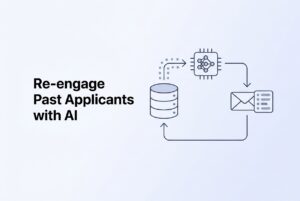
There is also a better hidden use case: candidate rediscovery. Instead of always starting from scratch, teams can search their own database and re-engage past applicants. That is often one of the highest-ROI sourcing channels because it is already inside your system.
For a small hiring team, this kind of automation is not a luxury. It is what keeps hiring from turning into a full-time spreadsheet cleanup job.
What analytics should you expect from AI recruiting software?
Good recruiting analytics should show time-to-fill, sourcing effectiveness, and pipeline bottlenecks. If the software cannot tell you where candidates are dropping out, it is not giving you enough signal.
For technical hiring, the useful metrics are practical, not flashy. You want to know which sources produce qualified candidates, where interviews are stalling, and how long roles stay open. You also want reports that can be exported and shared with the team.
CVViZ includes recruitment analytics for time to fill and effective sourcing channels, along with report export. That matters because a technical funnel can look busy while still leaking candidates at the top or middle. Analytics helps you see whether the problem is sourcing, screening, scheduling, or decision speed.
This is where a lot of teams get stuck. They collect applications, but they do not manage the funnel. If you cannot see bottlenecks, you will keep feeling like the team is “busy” without actually hiring faster.
How does CVViZ fit technical hiring teams?
CVViZ, a complete AI recruiting software, fits technical hiring teams that want AI screening, developer sourcing, interview tooling, and hiring automation in one platform. It is especially practical for SMBs, agencies, and growing in-house teams that need structure without enterprise complexity.
The platform combines:
- contextual AI resume screening
- relative resume ranking
- sourcing from GitHub, Stack Overflow, and LinkedIn
- job posting to 20+ free boards and 2,000+ boards in one click
- workflow automation
- video interviewing with a live code editor
- recruitment analytics
- ATS pipeline tracking
- recruitment CRM for agencies
That combination matters because technical hiring is a workflow, not a single task. You do not just need to find candidates. You need to rank them, move them, interview them, and keep the process visible.
CVViZ vs common alternatives
| Need | CVViZ approach | Typical gap in simpler tools |
|---|---|---|
| Screening | Contextual ranking | Keyword-only filtering |
| Sourcing | GitHub, Stack Overflow, LinkedIn | Job boards only |
| Interviews | Video plus live code editor | Separate tool required |
| Automation | Rules and triggers | Manual follow-up |
| Analytics | Time-to-fill and source tracking | Limited funnel insight |
For teams with limited headcount, that consolidation is the real benefit. It reduces tool sprawl and keeps the hiring process inside one system.
How much should a team budget for AI recruiting software?
Budget depends on team size and how much of the workflow you want in one place. For CVViZ, pricing starts at $99 per month for the Starter tier, with higher tiers available for larger usage and API access.
That pricing position matters because many alternative systems in this market move quickly into much higher annual or enterprise ranges. For a small or mid-sized team, the question is not just feature depth. It is whether the workflow you need is covered at a price that fits your stage.
If you are running lean and mainly need contextual screening, sourcing, automation, and technical interview support, a lower-cost AI ATS can be enough. If you need deeper enterprise customization, heavier reporting, or a more complex talent operation, you may end up in a different class of product.
The smarter move is to match the tool to the hiring problem, not the other way around. That is especially true in technical hiring, where the bottleneck is usually screening and coordination, not a lack of applicants.
FAQ
What should technical hiring teams prioritize in AI recruiting software?
Prioritize contextual AI screening, developer sourcing, interview workflows with code evaluation, workflow automation, and analytics. Those five capabilities solve the biggest bottlenecks in engineering hiring.
Can AI resume screening replace manual technical screening?
No. It should accelerate shortlisting, not replace human judgment. Final technical evaluation still needs recruiters, engineers, or hiring managers.
Is Stack Overflow still a sourcing channel in 2026?
Yes, but not as a job board. Stack Overflow Jobs no longer exists, so recruiters use Stack Overflow as a profile and credibility signal instead.
How many applications do recruiters process per hire?
In 2025, recruiters processed about 291 applications per hire. That is why screening tools matter so much.
Do SMBs need a separate coding assessment platform?
Not always. If your technical interview volume is moderate, a built-in live code editor may be enough. At higher volume, a dedicated assessment platform can be the better choice.
What is the difference between an ATS and a Recruitment CRM?
An ATS tracks applicants through hiring stages. A Recruitment CRM manages relationships, outreach, and longer-term candidate or client communication. Some platforms, including CVViZ, combine both.